
Chapter 2
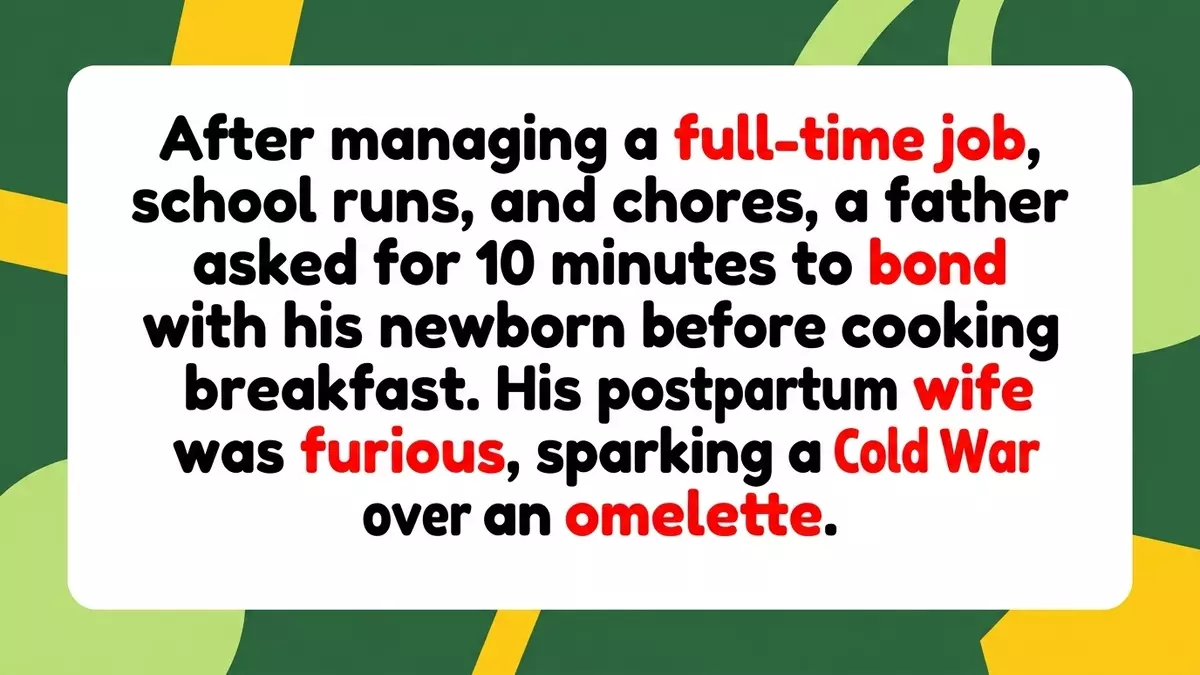
However, before stepping up to the hot stove, he made a modest request: he asked for just 10 minutes of quiet time to sit down, catch his breath, and bond peacefully with his newborn baby.
What should have been a completely reasonable boundary instead triggered a catastrophic emotional breakdown. His wife met the request with intense anger and immediate distress, causing an instant escalation that left both partners trapped on opposite sides of a painful, silent cold war over a plate of eggs.
Deconstructing the Psychological Forces at Play
When an argument over a 10-minute delay in cooking breakfast threatens a marriage, the conflict is never actually about the food. Relationship experts note that this scenario is a textbook example of deep-seated postpartum patterns clashing under extreme duress.
1. The Perils of Chronic Criticism
According to pioneering relationship psychologist Dr. John Gottman, chronic criticism is one of the single most destructive forces in a marriage, acting as a primary predictor of long-term relational decline.
When one partner feels constantly micromanaged or monitored, they don't feel loved; they feel judged. To avoid conflict, the criticized partner often retreats into passive compliance—agreeing to tasks just to "keep the peace"—which only bottles up the resentment until a minor spark causes a massive emotional explosion.
2. The Severe Physical Toll of Childbirth
At the same time, we cannot analyze this conflict without extending massive empathy to the postpartum mother. Childbirth subjects the female body to an unprecedented physical, emotional, and hormonal transformation. Postpartum healing involves massive, sudden drops in estrogen and progesterone, paired with severe, chronic sleep deprivation that directly impairs the brain's ability to regulate emotions.
| Partner Perspective | Immediate Trigger | Underlying Biological / Emotional Need |
| The Exhausted Father | Constant micromanagement and lack of validation | A brief moment of quiet autonomy; appreciation for his massive domestic output. |
| The Postpartum Mother | A 10-minute delay in receiving promised food | Immediate nourishment to counter extreme biological depletion, especially if breastfeeding. |
For a nursing mother, hunger is not a mild inconvenience; it is an immediate physical emergency. The body requires substantial caloric intake to produce milk, and dropping glucose levels can instantly trigger a fight-or-flight survival response. The wife's urgent, intense demand for food was almost certainly driven by deep biological depletion rather than malice, even though the delivery was deeply painful to a husband who was also pushing his physical limits.
Breaking the Cycle: How Couples Can Navigate the Postpartum Trenches
When a newborn enters the home, the old rules of relationship management no longer apply. To prevent temporary exhaustion from turning into long-term marital damage, relationship counselors recommend establishing proactive, survival-focused communication habits.