
Chapter 3
Separate the Child's Future from Your Own: You cannot effectively protect or provide a stable home for a child if your own life, education, and mental health are actively collapsing.
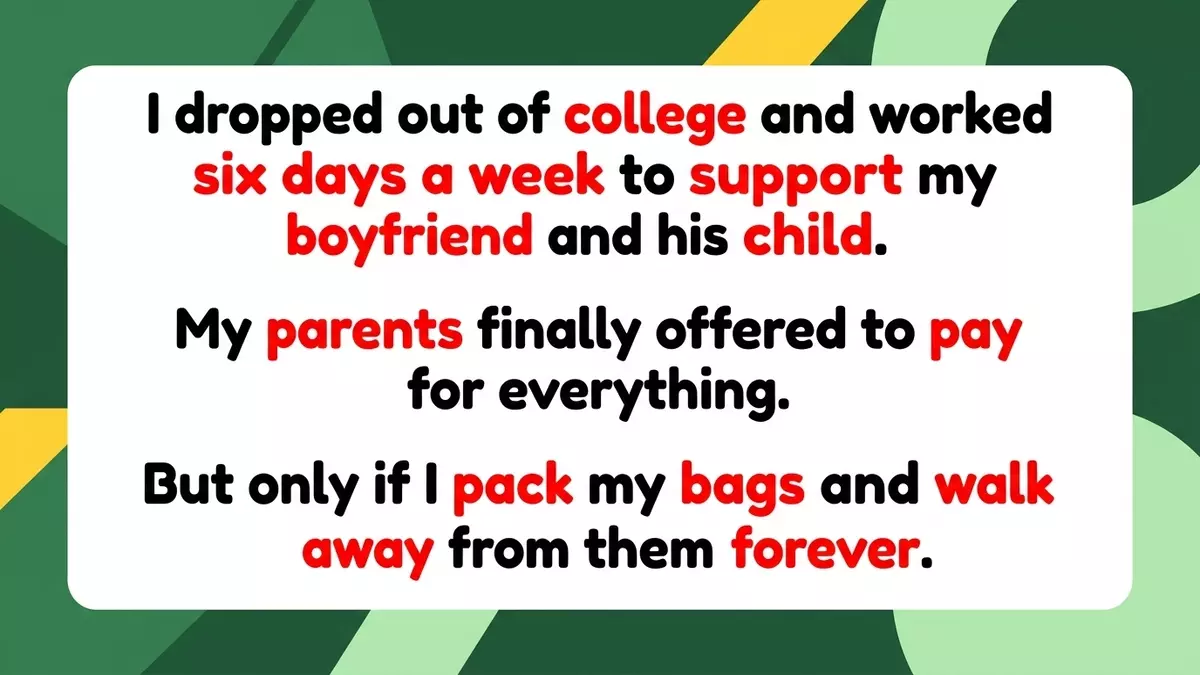
View Parental Help as a Tool for Accountability: Your parents' lifeline isn't a punishment for your partner; it is a boundary designed to restore your safety. Accepting it is an act of courage, not weakness.
Ultimately, friendships and romantic bonds require a foundation of mutual effort. When communication breaks down and a relationship demands that you destroy your own future to preserve someone else's comfort, the cost of staying is simply too high.
FAQs
What are the signs of an over-functioning relationship dynamic?
Signs include one partner managing all financial obligations, constantly fixing the other's mistakes, feeling entirely responsible for the household's survival, and experiencing chronic exhaustion, while the other partner remains passive, avoids employment, or focuses entirely on hobbies like video games.
Was it fair for the parents to condition their help on her breaking up with him?
Yes. From a parent's perspective, funding her life while she stays in that environment would mean their money is indirectly enabling the boyfriend's stagnation. The condition ensures their hard-earned resources are used exclusively to rebuild their daughter's future.
How do you handle the grief of leaving a stepchild or a partner's child?
It requires recognizing that you cannot control the adult's choices or fix their household. Processing this grief involves focusing on what you can control: your own stability. Securing your career and mental peace now ensures you can potentially be a healthy, supportive figure in that child's life in the future, should circumstances change.
Why do some adults choose video games over holding down a job?
In many cases, chronic gaming during a life crisis is a maladaptive coping mechanism for avoidance, depression, or a lack of self-esteem. The game provides immediate rewards and a sense of control that the real world—with its job hunts and financial pressures—does not offer, trapping the individual in arrested development.
How can a young adult rebuild their life after dropping out of college?
Rebuilding requires accepting support networks, creating an intentional budget, and taking advantage of institutional lifelines like re-enrollment programs or community colleges. Prioritizing individual goals and establishing firm relationship boundaries are essential for long-term recovery.