
Chapter 2
The Psychology of Hostage Hospitality and In-Law Control
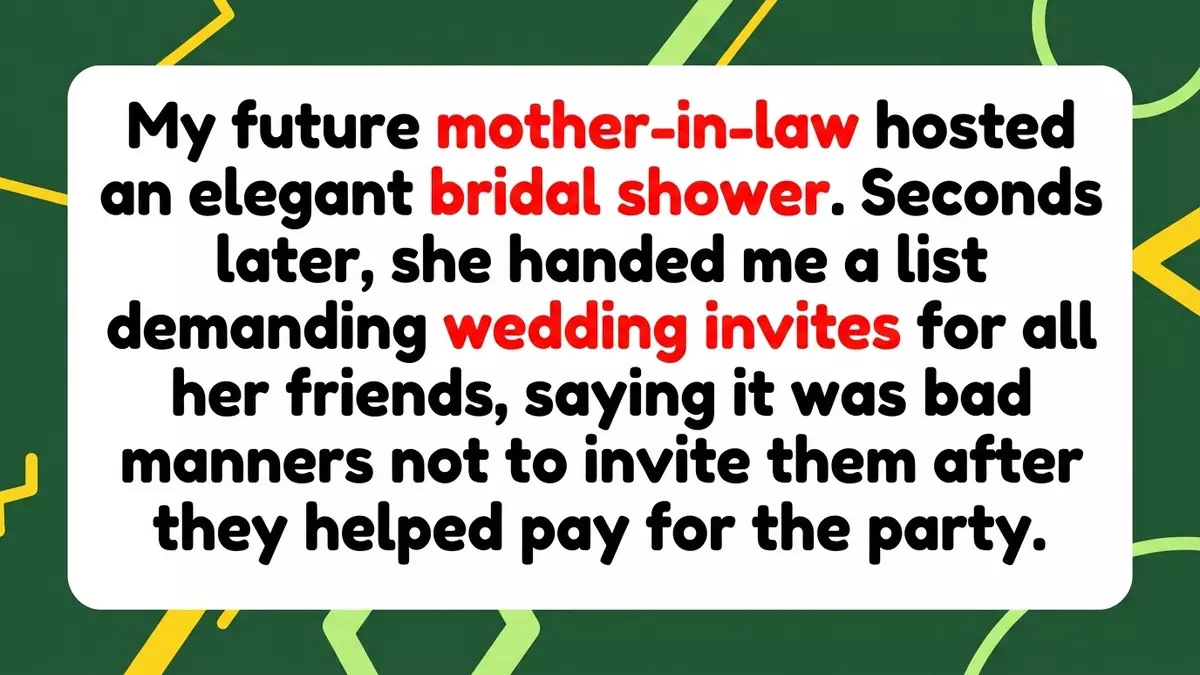
This awkward clash highlights a classic psychological tug-of-war disguised as hospitality. When a relative offers a gift or hosts an event but attaches unexpected conditions, it is rarely just about the event itself; it is about establishing dominance, leverage, and control early in the marriage.
Social Debt and the Compliance Test
In her landmark books on family boundaries, renowned therapist and relationship expert Dr. Susan Forward explains that passive-aggressive in-laws frequently use gifts and social favors as leverage to exert control over a young couple's choices.
By strategically involving her own social circle in the shower planning, the future mother-in-law cleverly manufactured a massive social debt. She expected the bride to repay this debt with coveted wedding invitations, using public guilt as a weapon to stretch the bride's limits.
A Direct Breach of Wedding Etiquette
Ironically, while the mother-in-law hid behind the guise of traditional manners, her demands actively broke standard social protocols.
According to universally recognized wedding etiquette guidelines, you should never invite someone to a bridal shower who is not already on the main wedding guest list.
By inviting her friends to the shower before securing their wedding seats, the mother-in-law engineered the breach of etiquette herself, then tried to force the bride to compromise her venue capacity to fix it.
Strategic Steps to Reclaim Your Guest List
Balancing family expectations with personal wedding boundaries is one of the toughest challenges a new couple can face. To resolve an in-law standoff without destroying the relationship, wedding specialists recommend a united, strategic approach:
1. Maintain a Completely United Front
The couple must agree on the boundaries in private before addressing the parents. The groom must take the lead on this conversation. When a son says "no" to his own mother, the boundary is seen as a family decision; when the bride says it, she is often unfairly cast as the villain.
2. Communicate Hard Physical Limits
Frame the refusal around the venue's rigid constraints rather than personal preferences. Use clear, unembellished language:
"The venue has a strict capacity limit tied to local fire codes, and we physically cannot add any more seats without violating our contract."
State the fact clearly without over-explaining, over-apologizing, or leaving room for negotiation.
3. Offer a Low-Stakes Compromise
To satisfy the mother-in-law's social ambitions without ruining the actual wedding day, offer an alternative celebration. Suggest hosting a small post-wedding luncheon or a casual backyard cocktail hour in the mother-in-law's hometown a few weeks after the honeymoon. This allows her to celebrate with her friends without altering the couple's dream wedding layout.