
Chapter 3
The Minority View: A Net Positive?
Conversely, a few commenters gently noted that the rise of "good deed videos" does occasionally inspire younger viewers to act kindly or donate to local shelters, even if the execution in this specific case was deeply flawed and unethical. However, the overwhelming consensus remained that inspiring others should never come at the expense of an unhoused person's right to privacy.
Conclusion: Setting Ethical Standards for Online Storytelling
The intersection of public charity and digital content creation continues to spark intense debate across social platforms. While spreading positivity is a noble goal, performative charity does far more harm than good when it compromises the privacy of those who have the least.
To maintain ethical standards, content creators must focus on establishing healthy boundaries by keeping cameras completely off when interacting with vulnerable populations. If the goal is truly structural advocacy, creators can share their own message or highlight local organizations without putting an individual’s immediate struggle on public display. Ultimately, drawing a line against digital exploitation is vital to preserving basic human decency in an increasingly connected world.
Frequently Asked Questions (FAQs)
1. What is "exploitative philanthropy" on social media?
Exploitative philanthropy refers to the practice of performing charitable acts on camera primarily to gain social media followers, views, and monetization, effectively using a vulnerable person's hardships for personal or financial growth.
2. Was the bystander legally allowed to stop the influencers from filming?
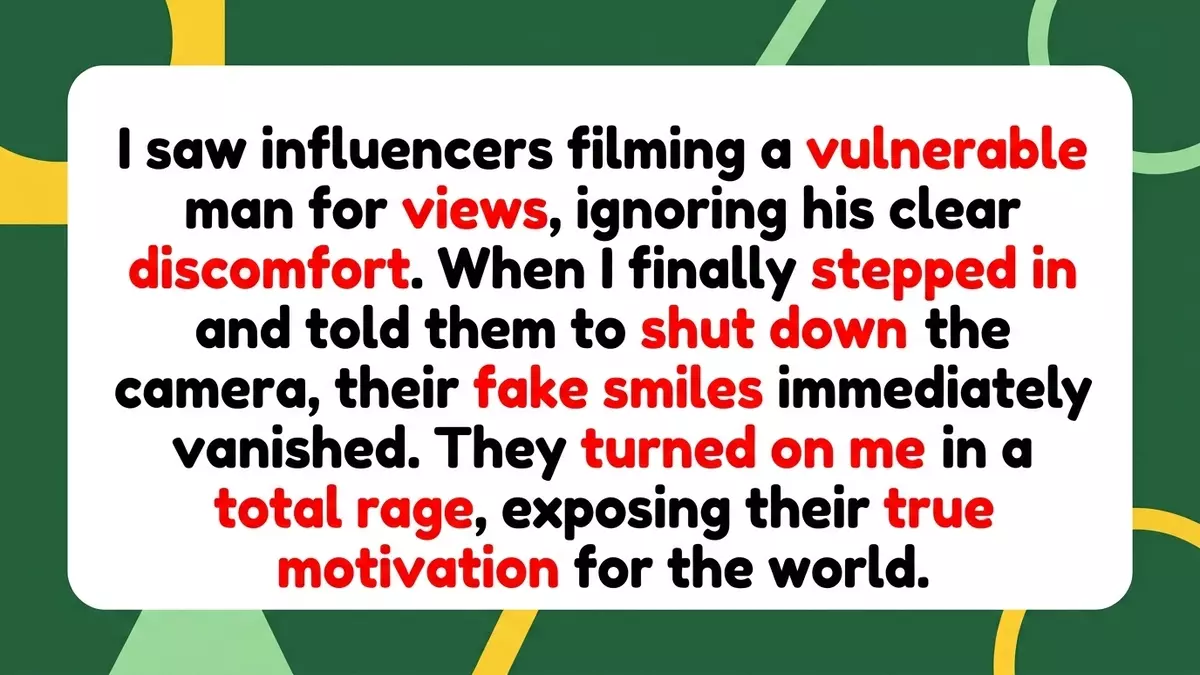
While public spaces generally allow photography and filming, the bystander did not use legal force; they used social intervention. By verbally calling out the behavior and creating a disruption, the bystander made it impossible for the influencers to capture the "wholesome" footage they wanted.
3. Why don't vulnerable individuals just say "no" to being filmed?
There is an inherent power imbalance in these situations. A person who is starving or lacking shelter may feel forced to consent to being filmed because they desperately need the food, money, or resources being offered by the camera crew.
4. How can content creators promote charity ethically?
Creators can practice ethical storytelling by blurring faces, keeping the camera focused strictly on themselves while speaking, or obtaining enthusiastic written consent post-interaction. Better yet, they can volunteer anonymously and use their platform to highlight local non-profit organizations instead.
5. How can everyday social media users help stop performative exploitation?
Users can combat this trend by refusing to watch, like, or comment on videos that feature vulnerable people without obvious consent. Scrolling past or reporting exploitative content trains the platform's algorithm to stop promoting transactional kindness.