
Chapter 3
Focus on Systems, Not Scapegoats: Instead of filming an individual's private struggles, creators can use their platforms to highlight local shelter programs, interview systemic experts, or showcase community organizations without putting a vulnerable person's identity on display.
Protect Anonymity if Filming is Vital: If capturing a public space is necessary for a documentary context, faces should be blurred, and identities should be carefully protected to preserve the dignity of those involved.
Conclusion: Speaking Up Against Digital Commodification
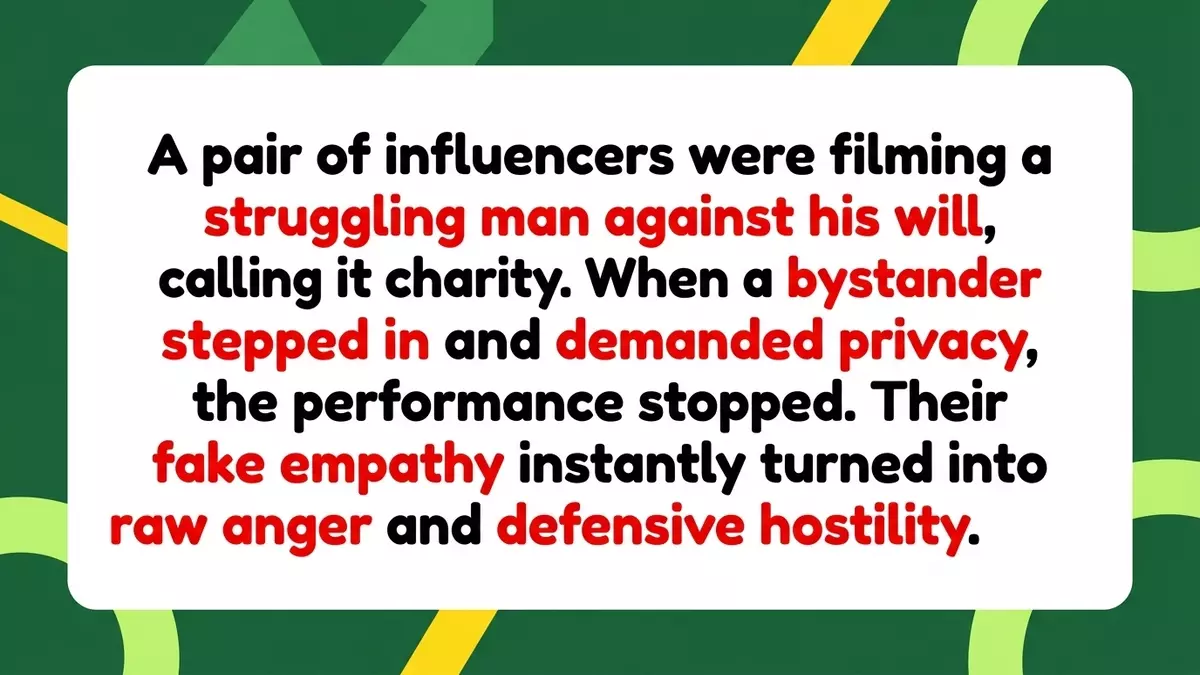
Ultimately, the dramatic street confrontation near the local market serves as a stark reminder that staying silent in the face of exploitation makes a bystander complicit. The Reddit community came in hot, offering nearly unanimous support for the bystander who intervened, reflecting a growing societal exhaustion with toxic influencer culture. While some argue that any video promoting a good deed has value, the consensus is shifting: performative charity that compromises the privacy of those who have the least does far more harm than good. Standing up for someone who cannot easily defend themselves is not an overstepping of boundaries—it is a restoration of them.
Frequently Asked Questions
Q1: Was the bystander legally allowed to stop the influencers from filming in a public space?
While public spaces generally allow for the recording of video under the law, individuals still maintain a ethical right to privacy and dignity. The bystander did not necessarily enforce a legal statute, but rather a social and moral boundary, stepping in to vocally defend a vulnerable person who was actively signaling distress and being ignored.
Q2: Doesn't filming charitable acts inspire other people to do good deeds?
While some viewers may feel inspired by positive videos, the systemic harm caused by exploiting an unconsenting person’s lowest moments outweighs the secondary benefit. True inspiration should stem from an authentic desire to help, not from watching a highly produced, transactional spectacle that treats a person in crisis as a prop.
Q3: How can viewers distinguish between genuine advocacy and performative charity?
Look closely at the framing and focus of the video. If the camera is primarily focused on the creator's emotional reactions, face, and "generosity," while the recipient appears uncomfortable, blindsided, or overly exposed, it is performative. Genuine advocacy focuses on the systemic issue, highlights resource organizations, and protects individual privacy.
Q4: What should I do if I witness influencers exploiting someone in public for content?
If it is safe to do so, you can mirror the bystander's actions by calmly stepping into the space and asking the creators if they have explicit consent to film. Alternatively, you can engage directly with the person being filmed to offer them an escape route or support, effectively disrupting the transactional footage the influencers are trying to capture.